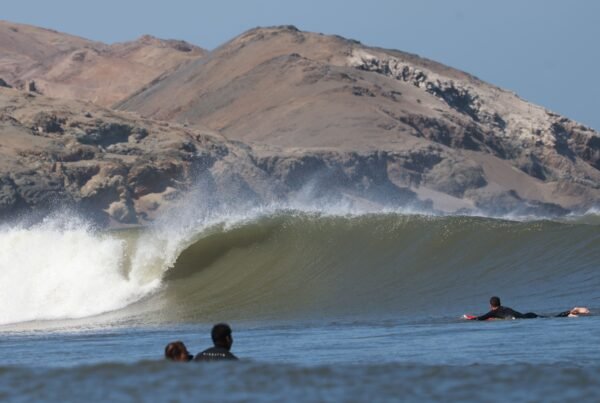
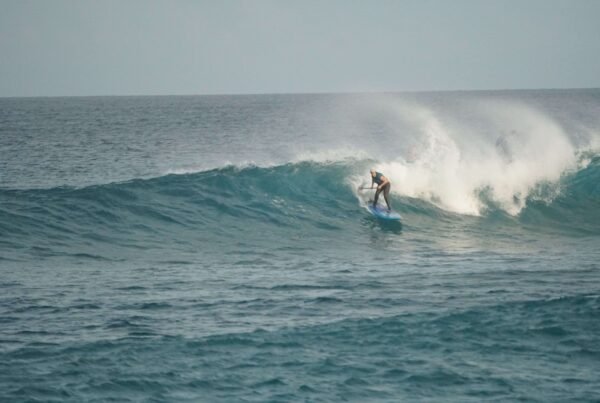
When people ask what board they should bring to Mentawai, they’re usually looking for a magic shape or a specific size. The truth is simpler and more honest than that. Mentawai doesn’t reward novelty or experimentation. It rewards familiarity, control, and trust between rider and board.
Reef waves here are fast and precise. They don’t give you time to adjust once you’ve committed. Your board needs to feel like an extension of your body — something you don’t think about when the wave stands up. If you’re still negotiating with your equipment at the takeoff, you’re already late.
Your board needs to feel like an extension of your body

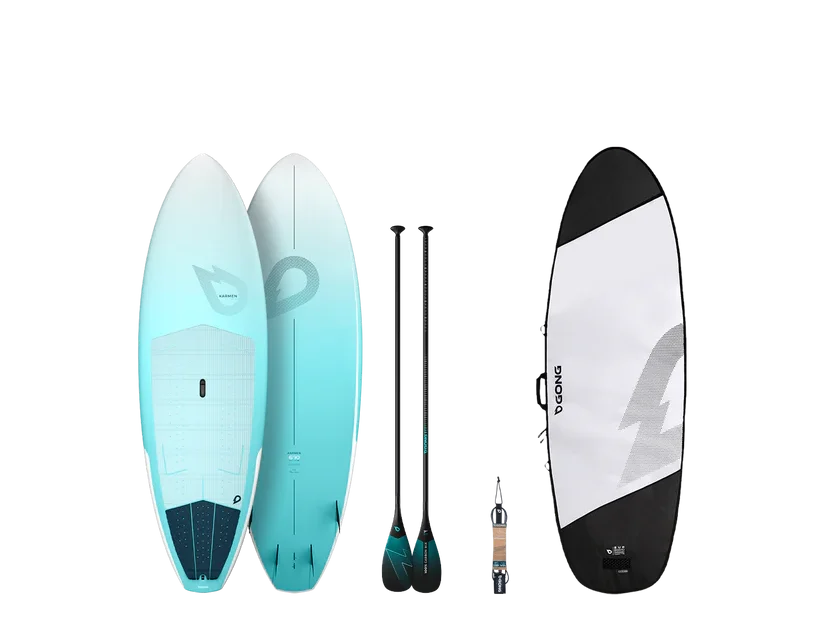
Most SUP surfers enjoy Mentawai the most on a relatively short, performance-oriented board. Something in the 8′ to 8’5 range tends to sit in the sweet spot: short enough to fit into tight reef takeoff zones, yet still stable enough to paddle confidently in current and wind. Longer boards can feel comfortable while waiting, but once the wave steepens, that extra length quickly becomes something you have to manage instead of enjoy.
VOLUME AND ROCKER
Volume is another area where people often go wrong. In powerful reef waves, too much float works against you. Boards with excessive volume tend to bounce on steep faces and resist being set on rail. What you want instead is a board that sits slightly deeper in the water, giving you connection and control when the wave draws up. If the board feels lively and responsive rather than corky, you’re heading in the right direction.
The outline and rocker matter more in Mentawai than almost anywhere else. A pulled-in nose and tail help the board fit into the pocket without catching, while a balanced rocker allows you to glide into the wave early and still handle sudden steepness. Flat boards feel fast in soft conditions, but on reef they can become unpredictable. A little extra rocker is a small price to pay for confidence on critical takeoffs.
Rails are where good sessions are made or lost. Well-shaped rails give you immediate feedback and hold, especially when the wave hollows a bit. Thick rails might feel forgiving at home, but on reef they slide when you need grip the most. In Mentawai, sliding is rarely a good option.
Volume is the most misunderstood factor. In Mentawai:
- Too much volume = loss of rail control
- Excess float = bounce on steep faces
GENERAL GUIDELINE
For most experienced SUP surfers:
- 7’0” – 7’8” → high-performance, hollow waves
- 7’6” – 8’6” → daily driver for mixed conditions
Shorter boards:
- Fit into steeper pockets
- Engage rails earlier
- Recover faster in critical sections
Long boards struggle to:
- Fit into tight takeoff zones
- Redirect quickly
- Avoid catching the nose on late drops
General guideline:
Choose the lowest volume you can paddle confidently for long sessions.
You should be able to:
- Paddle efficiently in current
- Hold balance while waiting
- Step back instantly on takeoff
ONE BOARD OR TWO
Ideally:
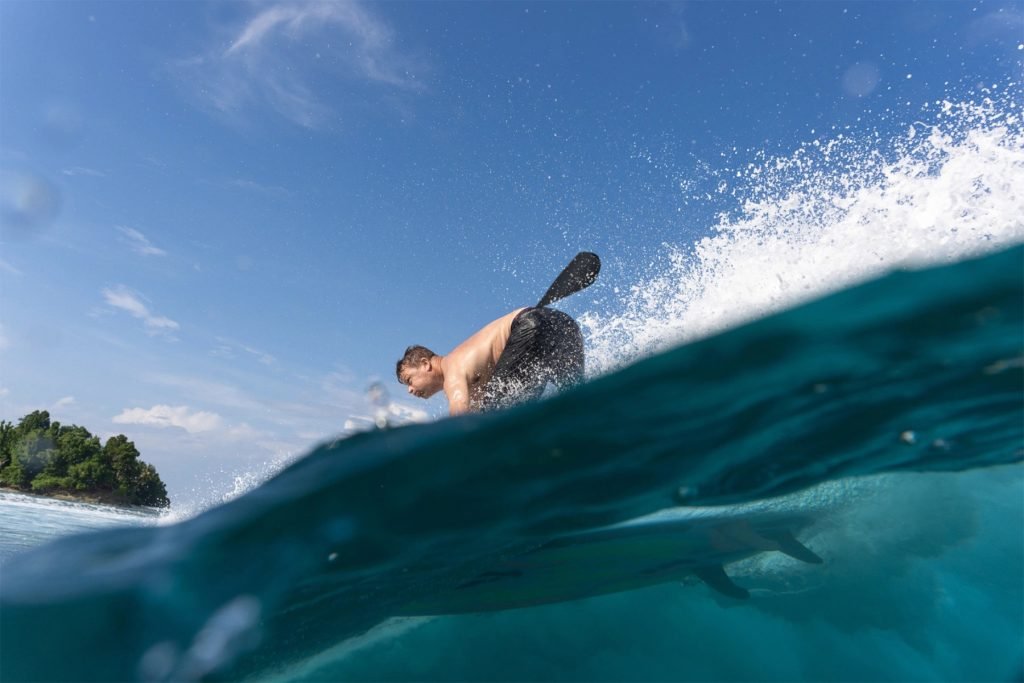
- Primary board: performance SUP
- Backup board: slightly more volume
Boards break. Conditions change.
Having a backup is not luxury — it’s intelligence.
What Boards Fail in Mentawai
Avoid:
- All-round beginner SUPs
- Inflatable SUPs (never)
- Wide noses and tails
- Excessively thick rails
These boards create:
- Late reactions
- Rail chatter
- Loss of control on critical drops
Mentawai does not reward experimentation.
It rewards preparation and familiarity. The best board in Mentawai is not the newest — It’s the one you know intimately.